WEBINAR ON IMF-WB AND FORCED MIGRATION
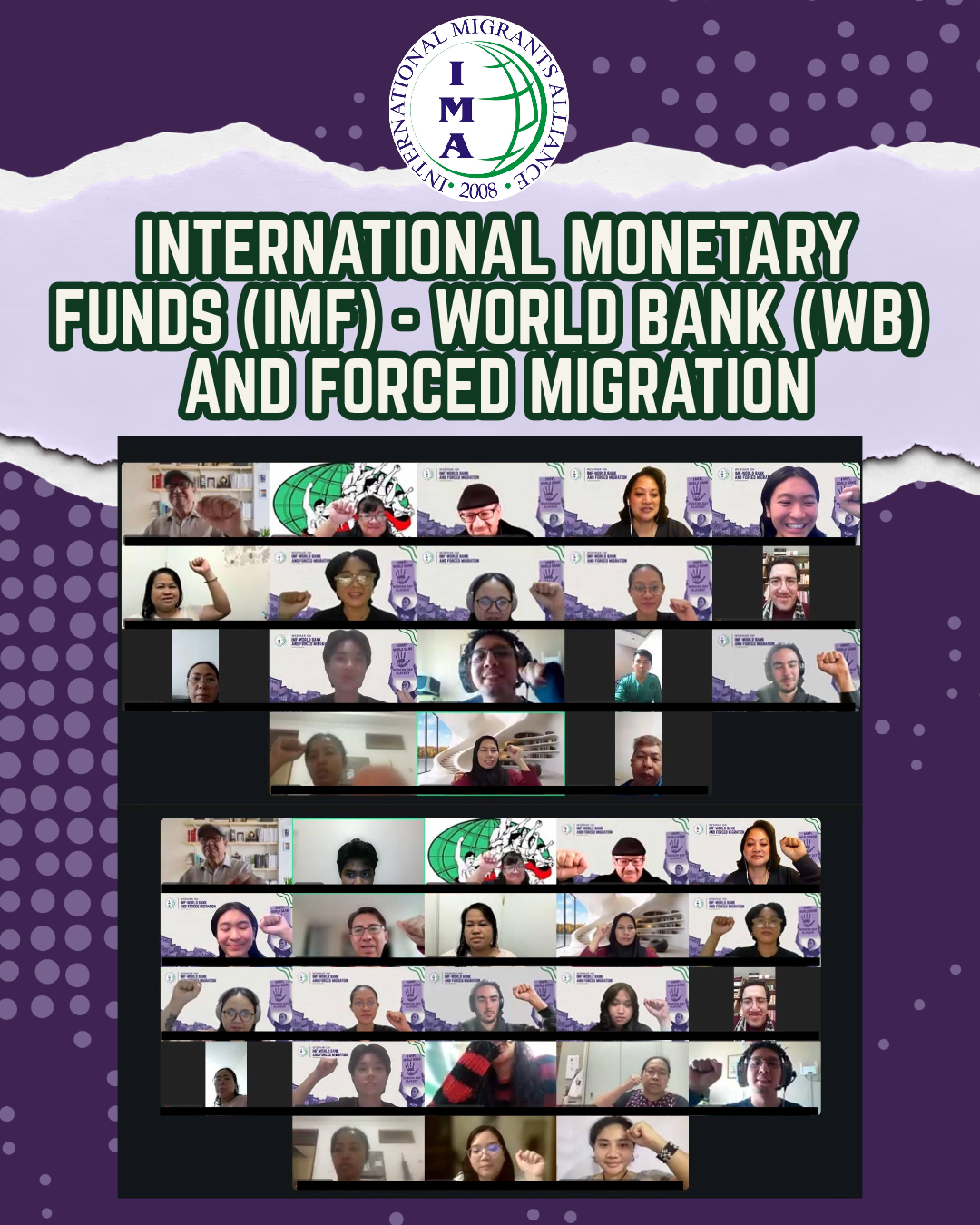
On October 3, members of the International Migrants Alliance (IMA) hosted a webinar examining how the economic mandates of the International Monetary Fund (IMF) and the World Bank directly aggravate global poverty and spur forced migration.
The event featured insights from experts and grassroots organizers, including Manuel Hidalgo from MIREDES and IMA Executive Committee, Dr. Víctor Abel Niquinga Ruiz from CADHU, and Josie Pingkihan representing Migrante International. They were joined by Antonio Arizaga from Frente Unido de Inmigrantes Ecuatorianos and the IMA ICB, as well as Done Denina from the Peoples Global Campaign Against IMF-World Bank. Together, the speakers detailed how international financial institutions enforce neoliberal policies that systematically destabilize working-class communities across the Global South.
Abrupt U.S. interest-rate hikes during the 1980s triggered a severe debt crisis across Latin America, opening the door for aggressive structural intervention by the IMF and World Bank. Structural Adjustment Programs (SAPs) became the principal mechanism for economic leverage. To secure essential loans, recipient governments were coerced into implementing rapid privatisation, deregulation, public-sector cuts and labour flexibilisation. These measures fundamentally eroded local social safety nets and reshaped regional economies. The devastating consequences quickly spread beyond Latin America, catalyzing the 1990s financial crises in Mexico and Asia. Today in 2026, debt obligations continue to drain national budgets: Paraguay is projected to allocate 40% of its tax revenues toward debt servicing, compared to 18% in Peru and 30% in Ecuador, effectively starving public healthcare and education programs.
In response to these destructive pressures, widespread resistance emerged across the region. During the early 2000s, popular movements in nations like Argentina and Brazil pushed back against foreign financial control, demanding economic sovereignty. However, a political counteroffensive after 2015 reimposed strict austerity, accelerated currency devaluation, and empowered authoritarian political elites aligned with foreign corporate interests.
Speakers highlighted that private-sector branches of the IMF and World Bank, such as the International Finance Corporation (IFC), channel targeted investments through offshore tax havens, effectively siphoning wealth out of developing countries. Furthermore, rigid loan conditions directly conflict with state obligations to protect health, education and labour rights under international human rights frameworks. By undermining collective bargaining rights and weakening labor standards, these policies clear the path for aggressive resource extraction projects that forcibly displace Indigenous and rural populations while accelerating environmental damage.
Agricultural deregulation and trade liberalisation promoted by the IMF and World Bank severely undermine local food production by forcing small farmers to compete with heavily subsidized foreign imports. Simultaneously, privatizing critical utility services such as water and electricity inflates basic living expenses beyond the reach of average families.
As domestic employment opportunities dry up and real wages plunge, workers face intense economic pressure to look for work abroad. Instead of addressing the underlying economic structural issues, governments and recruitment agencies exploit labor export pipelines to generate vital revenue through migrant worker remittances, even as emigrants encounter severe risks of debt bondage, human trafficking, and workplace abuse.
Finally, global financial bodies actively capture profits from this expanding remittance economy via initiatives like the United Nations' Global Forum on Remittances, Investment and Development (GFRID), treating displaced workers as commercial commodities rather than human beings seeking safety and economic dignity.
