[STATEMENT] IMA - Indonesia: Joint Statement for International Labor Day 2026
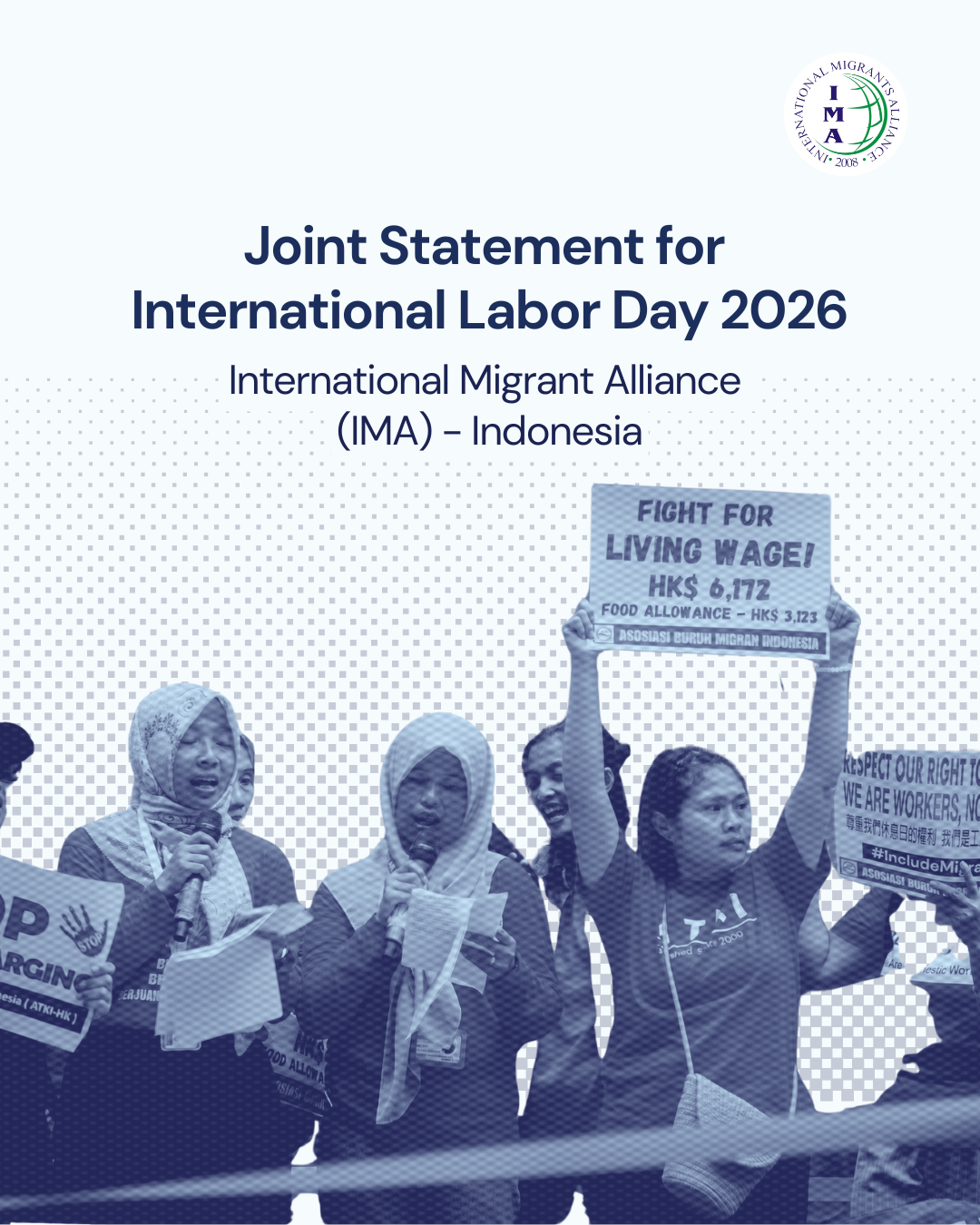
For International Labor Day 2026, we are calling Indonesian migrant workers to rise up and unite to resist all forms of oppression and exploitation toward the working class, both in Indonesia and the rest of the world.
International Labor Day reveals the bloody resistance to long working hours and the demand for working hours that guarantee the safety, health, and humanity of workers through reasonable working-time arrangements, sufficient rest time, and effective monitoring in accordance with international standards.
Throughout the history of Labour Day, migrant workers have equally taken part in the fight for better working conditions.
Migrant workers are a part of the exploited international working class that is used as the sacrifice for neoliberal policies, ones that profit global capitalism.
The worsening condition of the economy, environment, and global political crises, state repression, and discrimination against migrants create precarious conditions that lead them to experience layered human rights violations and modern slavery.
For receiving countries, migrant workers receive low wages, long working hours, and exploitative working conditions. On the other hand, sending countries treat migrant workers like remittance machines that provide the state with foreign exchange reserves without robust access to information, safety, and justice.
In the momentum of this year’s International Labor Day, grassroots organizations and migrant workers advocate that are part of the International Migrant Alliance (IMA), demand that the Indonesian Government commit to and be accountable to fulfill the rights of all Indonesian migrant workers and returned migrant workers.
To support, service, and protect all Indonesian migrant workers swiftly, non-discriminatory, ethical, just, and humanely in both land as well as maritime sectors.
The Indonesian government neglects basic migrant workers' rights and returned migrant workers’ rights.
Migrant workers’ needs of higher wages and humane working conditions (working hour, food and proper bed;
weekly day off, leave, medical help, elimination of fee collection;
call to end document confiscation by P3MI and agents;
and rights to reintegration service economically, socially;
concrete aid and service for migrant workers in need, scam victims, and human trafficking victims) are not prioritized by the government
Commitments for migrant workers’ safety are written in policies, but the right to physically gather, organize, and unionize at times are still repressed. This is a direct manifestation of the neglect of exploitative labor practices experienced by migrant workers.
Many migrant workers face intimidation, pressure from employers, and regulatory constraints that limit their freedom to unionize safely and independently. . Indonesian migrant workers and returned migrant workers are still not included in the implementation and evaluation of regulations and programs regarding migrant workers’ rights, aspirations, and meaningful participation. They are purely treated as objects in policymaking and programs.
Assistance and the presence of the country are mere jargons that do not have actual impact in real life.
Migrant workers and returned migrant workers are still exploited, neglected, and forced to fight on their own to protect themselves.
In the middle of the state’s absence to protect and assist the rights of migrant workers, grassroots communities and their supporters are the ones who are collectively working together to replace the government’s role to safeguard and fight for migrant workers’ rights in many countries.
In the middle of the growing global repression against grassroots movements, the rights of migrant workers are becoming more threatened both politically and economically.
To make those aspirations a reality, the Indonesian government must:
Include grassroots migrant workers and returned migrant workers communities to the preparation, monitoring, and evaluation of policy and programs related to labor migration and migrant rights.
Create concrete steps and programs to answer fundamental problems faced by migrant workers and returned migrant workers.
Create and operationalize a complaints and grievances mechanism that is accessible and victim-centered (migrant workers in their receiving countries and returned migrant workers in their own regions) that ensures the victim’s rights to report, effective compensation, legal aid, and protection against all kinds of retaliation that includes the enforcement of the non-punishment principle (for human trafficking victims)
Actively and constructively negotiate with receiving countries in terms of wages, working hours, and proper accommodation for all migrant workers.
Building and implementing an ethical workers recruitment process based on the Employer-Pays Principle, ensuring no recruitment fee is paid by workers in every stage of the migration process.
Realize the commitment to protect migrant workers through national regulation and commitment in the international forum of the International Convention on the Protection of the Rights of All Migrant Workers and Members of Their Families (ICMW) and the Global Compact for Safe, Orderly and Regular Migration (GCM) to steps that are concrete, measurable and side with migrant workers and returned migrant workers’ rights.
Ratify the Decent Work for Domestic Workers Convention C189.